
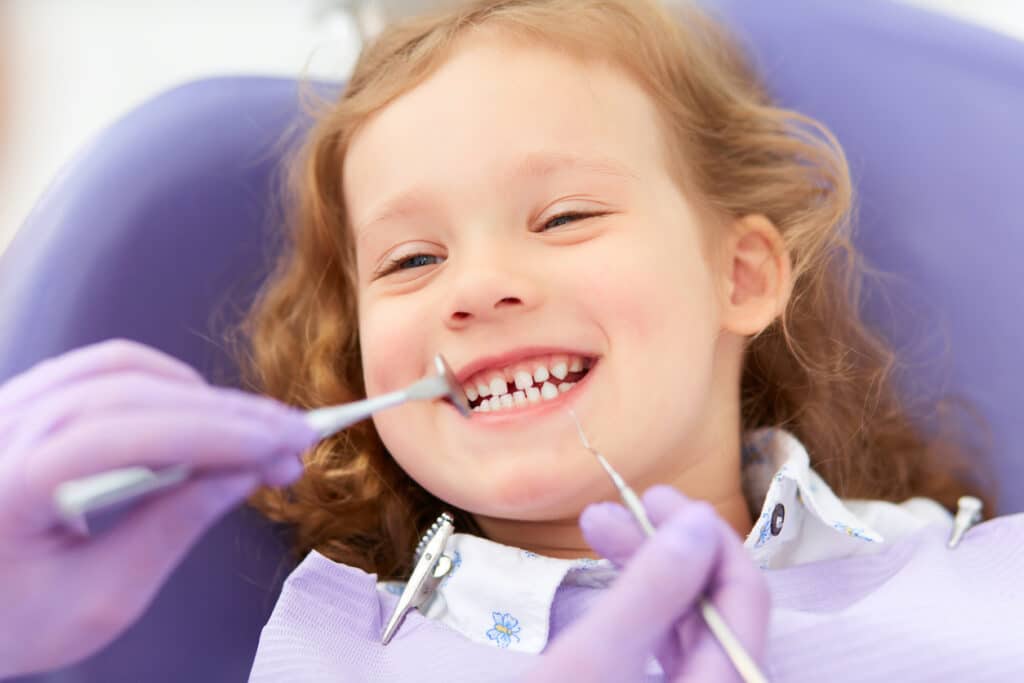
A child’s first dental visit at Timber Family Dental is a preventive visit that safely introduces them to the clinical environment. Medical literature suggests that the first dental visit often occurs only after age 7 and is usually prompted by complaints like caries and tooth pain [1] (Padung et al., 2022). It includes a gentle professional cleaning, sensory-friendly cavity screenings, and behavioral conditioning to build lifelong oral health habits while actively preventing pediatric dental anxiety.
Preparing Your Child for the Dentist at Home: What to Do Before the Visit
Children are keen observers and will quickly pick up on your emotional cues. If you feel stressed about their upcoming appointment, they will feel it too. You can set the stage for a positive clinical visit right in your living room by choosing your words carefully. Steer clear of negative trigger words. Instead, make the visit a fun health mission. Tell your child the dentist is going to ‘count their teeth’ and use a ‘special tickle toothbrush’ to make their smile sparkle. You can even role-play the appointment at home. Have your child recline on the couch, open wide, and let you count their teeth with a small flashlight. Normalizing this posture at home makes the dental chair feel familiar.
Handling the "Wiggle Worm": Care for High-Energy Kids
Many parents delay their child’s first interactive visit because they fear their child will not sit still. You might worry your high-energy preschooler will disrupt the clinic or refuse to open their mouth. Rest assured, wiggling, squirming, and even a few tears are completely normal and age-appropriate. Our clinical team is trained to handle the “wiggle worms.” We do not expect perfect stillness from a three-year-old. Instead, we use rapid pacing. Dr. Byrd and Dr. Barbaro work quickly and efficiently, capturing necessary visual information in mere seconds. Medical evidence suggests audiovisual distraction can effectively reduce fear and anxiety in children during dental treatment [2] (Al-Khotani et al., 2016). If your child becomes overwhelmed, we simply take a break. We never force a treatment. Our primary goal during this phase of life is to build behavioral trust, not achieve clinical perfection.
The Role of Fluoride Varnish in Growing Smiles
As your child begins brushing their own teeth, they will inevitably miss a few spots. To provide an extra layer of defense against early decay, we apply a professional-grade fluoride varnish at the end of their cleaning. Clinical evidence indicates that fluoride varnish (FV) prevents caries, with approximately 37% caries reduction in primary dentition and 47% in permanent dentition [3] (Almalki et al., 2025). This process takes less than ten seconds. The hygienist simply paints a sticky, flavored gel directly onto your child’s enamel. The varnish acts as a biological shield. It bonds to the teeth, protecting the outer shell to resist acid from daily snacks. Because the varnish sets instantly upon contact with saliva, your child can eat and drink normally almost right away. This simple, painless step provides months of cavity protection while they perfect their brushing skills.
Comparisons: Mapping Your Child's Dental Milestones
Understanding the difference between early childhood visits helps you book the right care. Here is how your child’s dental needs evolve based on Cost, Durability, and Maintenance Level.
Visit Type | Primary Purpose | Cost Expectation | Durability (Skill Retention) | Maintenance Level |
Infant Lap Exam (Age 1-2) | Quick visual check for baby bottle decay; parents hold the child. | Low (Usually 100% covered by PPO plans). | Low (Child is too young to build independent clinic skills). | High (Requires parents to do 100% of the daily brushing at home). |
Interactive Exam (Age 3-5) | First independent professional cleaning, polishing, and behavior building. | Low (Typically 100% covered by PPO plans). | High (Establishes a durable baseline of trust and familiarity). | Moderate (Parents transition to supervising the child’s brushing). |
Early Orthodontic Check (Age 7+) | Evaluates jaw growth and adult tooth eruption to prevent crowding. | Low (Standard exam coverage applies). | High (Guides facial development and prevents complex bite issues). | High (May require the child to wear space maintainers). |
Dietary Transitions: Protecting Enamel Before Kindergarten
As your child transitions into preschool or a Wake County daycare program, their diet changes. They move beyond toddler foods and start eating more independent meals and lunchbox treats. This dietary shift often brings hidden sugars that threaten their primary teeth. Sticky snacks like fruit snacks, gummy vitamins, and granola bars can wedge into the deep grooves of their back molars. Gulping juice boxes soaks their enamel in acid. Trade sticky sweets for crunchy options like apple slices or cheese cubes that naturally scrub the teeth and protect their smile. Most importantly, encourage them to drink tap water sourced from Garner’s municipal supply. The natural fluoride in local water washes away food debris and helps keep their enamel strong between checkups.
Why Growing Families Choose a Unified Dental Home
When your child is an infant, you might consider visiting a pediatric-only specialist. However, managing multiple healthcare clinics becomes a logistical burden as your children grow. Driving across town to a pediatric office for your preschooler while booking a separate general dentist for yourself drains your time. Switching to a comprehensive family practice like Timber Family Dental solves this problem. We treat patients of all ages under one roof. You can book synchronized appointments, allowing your child to get their teeth cleaned in one room while you receive your preventive care right next door. Your child can see you interacting happily with our staff, which promotes positive behavior. A unified dental home ensures your family’s continued care and smooth transitions as you grow and change.
FAQs
1. Can I stay in the room during my child's dental cleaning?
Yes. We encourage parents to stay in the treatment room during these early interactive visits. Your presence provides quiet reassurance. We act as partners, allowing you to hold their hand while our clinical team guides them through the fun “tell-show-do” process.
2. Are dental X-rays safe for my preschooler?
Absolutely. We only take X-rays when clinically necessary, usually when the back baby teeth start touching, making it hard to spot hidden cavities.
3. When is the best time to schedule a dental appointment for a child in Garner?
Young children should be seen in the morning appointments. Plan to visit soon after breakfast when your child is rested, fed, and cooperative. Late-afternoon appointments often coincide with nap times or post-school weariness, which can easily lead to unnecessary crankiness.
References
[1] Padung, N., Singh, S., & Awasthi, N. (2022). First Dental Visit: Age Reasons Oral Health Status and Dental Treatment Needs among Children Aged 1 Month to 14 Years. International journal of clinical pediatric dentistry, 15(4), 394–397. https://doi.org/10.5005/jp-journals-10005-2406
[2] Al-Khotani, A., Bello, L. A., & Christidis, N. (2016). Effects of audiovisual distraction on children’s behaviour during dental treatment: a randomized controlled clinical trial. Acta odontologica Scandinavica, 74(6), 494–501. https://doi.org/10.1080/00016357.2016.1206211
[3] Almalki, A. S., Alshahrani, O. S., Aljoaid, F. A., Alrwiali, M. A., Alrais, R. A., Alfuhigi, A. B., Alfehaid, R. A., Daghriri, R. M., Alwably, A. N., Alenazi, G. M., & Alasmari, A. A. (2025). Effectiveness of Various Fluoride Varnishes in Preventing Dental Caries in Children and Adolescents: A Systematic Review of Evidence From Educational Settings. Cureus, 17(11), e96323. https://doi.org/10.7759/cureus.96323