
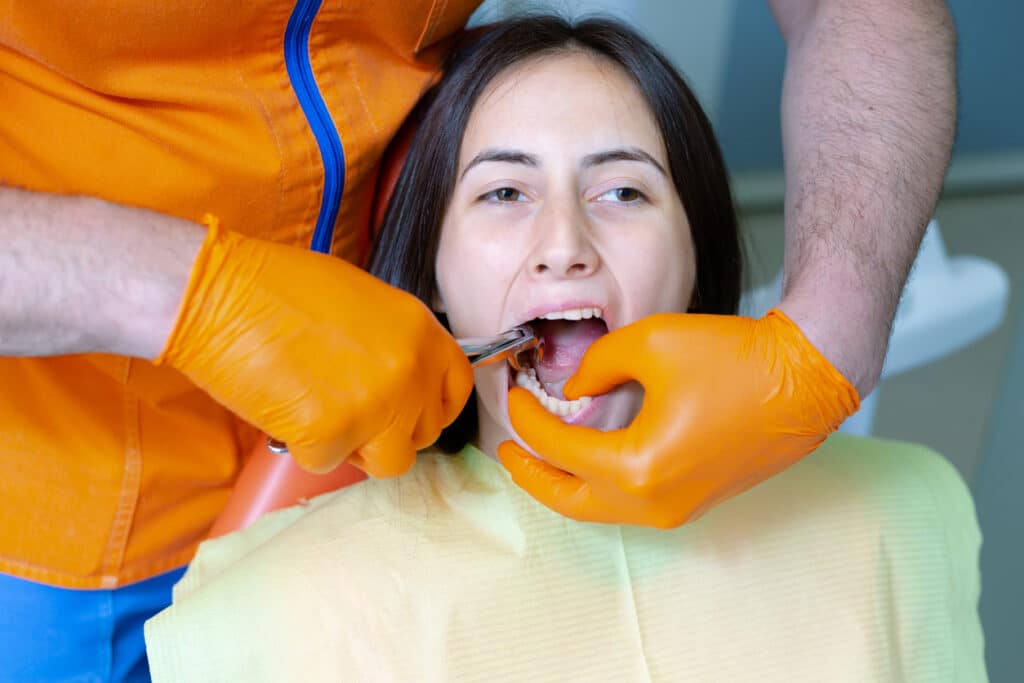
The medical literature indicates that dental extractions are treatments offered by practitioners with varying degrees of experience [1] (Gadhia et al., 2023). Utilizing modern local anesthetics and advanced diagnostic imaging, this treatment at Timber Family Dental provides immediate pain relief and sets a healthy foundation for future restorative care.
How to Prepare for Your Extraction Appointment
Going into your appointment with a clear plan easily reduces your stress. Because our clinic relies on advanced, localized numbing rather than heavy sedation, you do not need to fast the night before. Eat a normal, healthy breakfast. Take your daily prescription medications as usual unless Dr. Byrd or Dr. Barbaro specifically instructs you otherwise. If you take blood thinners, we will review your medical history in advance to help keep you safe. Because you remain awake and alert, you can safely drive yourself back to your Garner home or office the moment your visit wraps up.
The Critical First 48 Hours: Preventing Dry Socket
You have likely heard painful rumors about a condition called “dry socket.” While this complication is uncomfortable, it is also highly preventable. After we remove your tooth, a natural blood clot forms in the empty space. This clot acts as a biological bandage, protecting your exposed bone and nerves. Additionally, clinical literature supports that local chlorhexidine or applying platelet-rich plasma can reduce the likelihood of developing dry socket [2] (Taberner-Vallerdu et al., 2017). Your only job is to protect that clot. For the first two days, do not use drinking straws. The suction easily pulls the clot loose. Avoid smoking, spitting forcefully, and rinsing your mouth aggressively. Following these simple steps keeps the clot secure and guarantees a smooth recovery.
Comparisons: Treating a Severe Toothache
When a tooth is failing, you have a few options. Here is how an extraction compares to other pathways based on out-of-pocket costs, results, and follow-up care.
Treatment Pathway | Primary Result | Cost Expectation | Maintenance Level |
Gentle Tooth Extraction | Immediate pain relief; removes the infection source. | Low to Moderate (Often covered up to 80% by insurance). | Low (Requires a few days of soft foods and careful brushing). |
Root Canal & Crown | Saves the natural tooth structure. | High (Requires dual procedures). | Low (Treat it like a normal tooth once the crown is placed). |
Ignoring the Problem | Temporary delay; infection spreads to the jawbone. | Zero upfront, but very high later. | High (Leads to systemic health issues and emergency surgeries). |
Your Post-Extraction Diet: What to Eat and Avoid
The medical literature supports the view that macronutrients and micronutrients are integral to optimal periodontal health and can accelerate oral wound healing [3] (Lau et al., 2013). Stocking your pantry before your procedure makes your recovery completely stress-free. For the first 48 hours, stick to a strict soft-food diet. Stock up on yogurt, applesauce, protein shakes, and lukewarm soups. Avoid very hot liquids such as fresh coffee, as the heat can dissolve your protective blood clot. On the third day, you may start adding soft, chewable foods such as scrambled eggs, mashed potatoes, and flaky fish. Avoid crunchy chips, nuts, and seeds for at least a week. Small hard particles can easily get lodged in the healing socket and cause painful irritation.
Understanding the Difference: Simple Versus Surgical Extractions
Dental terminology can confuse patients and leave them unsure what care they need. “Simple extraction” means your damaged tooth is fully visible above the gumline. Our clinical team simply grasps the tooth and gently wiggles it free. A “surgical extraction” is required when your tooth breaks off at the gumline or remains trapped inside the jawbone. For a surgical approach, we make a tiny incision in the gum tissue to safely access the root. Both methods use the exact same localized numbing techniques, meaning your comfort is guaranteed either way.
Life After the Pull: Preserving Your Bite and Jawbone
Removing a failing tooth solves your immediate pain. However, leaving an empty space in your smile creates new problems down the road. When a tooth goes missing, your surrounding teeth naturally drift into the open gap. This shifting ruins your bite alignment and makes chewing difficult. To prevent this, we often place a small, sterile bone graft into the socket immediately after the extraction. This proactive step preserves your jaw structure. After a few months of healing, your jaw remains perfectly strong and ready for a durable dental implant or custom bridge.
FAQs
1. Does getting a tooth pulled hurt?
No. Thanks to modern dental anesthetics, you will not feel sharp pain during the procedure. You will only feel a sensation of pressure or pushing. If you feel any discomfort, you simply raise your hand, and we will pause to administer more numbing medication.
2. How long does it take to recover from an extraction?
Most patients return to their normal daily routines within 48 hours. The initial healing phase involves a healthy blood clot forming over the first two days. Complete healing of the gum tissue takes about two to three weeks. We will give you a specific list of soft foods to eat and instructions on how to keep the site clean.
3. Can I replace my extracted tooth right away?
It depends on the health of your jawbone. In some cases, we can place a dental implant on the exact same day the tooth is removed. In other situations, we recommend letting the bone heal for a few months before discussing a bridge or implant. Your doctor will outline the best replacement timeline for your unique smile.
References
[1] Gadhia A, Pepper T. Oral Surgery, Extraction of Teeth. [Updated 2023 Jun 1]. In: StatPearls [Internet]. Treasure Island (FL): StatPearls Publishing; 2026 Jan-. Available from: https://www.ncbi.nlm.nih.gov/books/NBK589654/
[2] Taberner-Vallverdú, M., Sánchez-Garcés, M. Á., & Gay-Escoda, C. (2017). Efficacy of different methods used for dry socket prevention and risk factor analysis: A systematic review. Medicina oral, patologia oral y cirugia bucal, 22(6), e750–e758. https://doi.org/10.4317/medoral.21705
[3] Lau, B. Y., Johnston, B. D., Fritz, P. C., & Ward, W. E. (2013). Dietary strategies to optimize wound healing after periodontal and dental implant surgery: an evidence-based review. The open dentistry journal, 7, 36–46. https://doi.org/10.2174/1874210601307010036