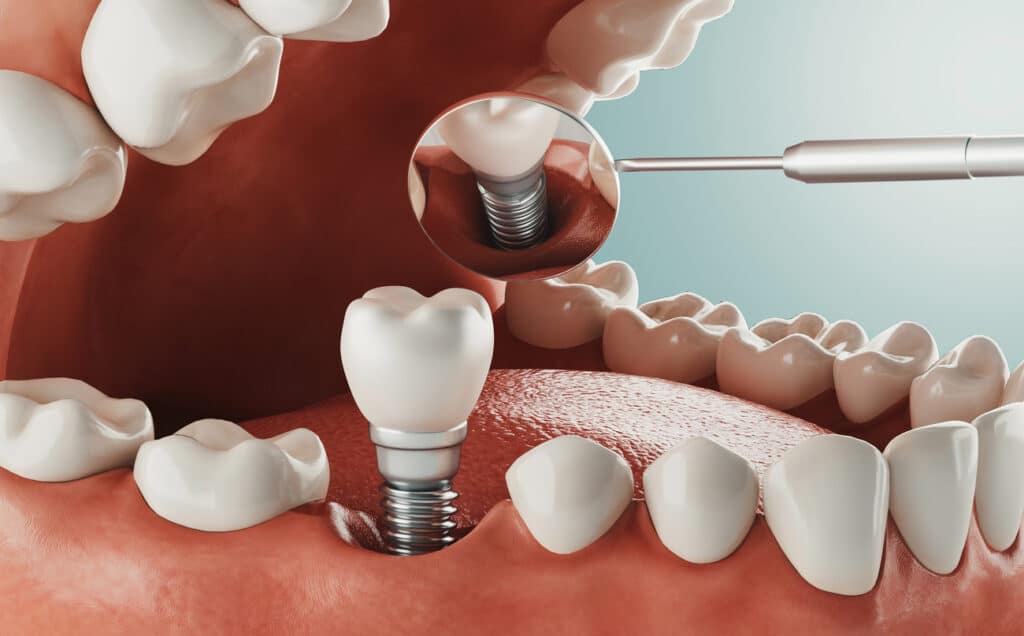
Dental insurance often covers parts of a dental implant procedure, though rarely the full cost. Most PPO plans classify the titanium post as a surgical expense and the implant crown as a major restorative treatment, typically covering 50% of the final crown, extractions, and preliminary bone grafting. Additionally, medical literature supports that expanding dental insurance coverage could increase the use of partial dentures by 13.5% and dental implants by 60.53% among individuals aged 65 and over [1] (Zhao et al., 2024).
How to Overcome a Dental Implant Claim Denial
Getting a denial letter in the mail feels like a punch to the gut. However, a denial is rarely the final answer. Insurance companies often automatically reject implant codes simply because they want more proof of your condition. We do not take “no” for an answer. Our administrative team at Timber Family Dental will file a formal narrative appeal on your behalf. We send your 3D intraoral scans, digital X-rays, and specific clinical notes directly to the claims adjuster. We use this hard data to prove that your implant is a medical necessity to save your jawbone, forcing the insurance company to reconsider your claim.
Can Your Health Insurance Pay for Dental Implants?
You will naturally look to your dental insurance to pay for a new tooth. But did you know your standard medical insurance might also chip in? Standard dental plans handle everyday tooth decay. However, if you lost your tooth due to a physical accident, a sports injury in Wake County, or an underlying medical cyst, your health insurance views the surgery differently. While health insurance rarely covers the final porcelain crown, it will often pay for the surgical tooth extraction and the necessary bone graft. We help you review all your active policies to uncover hidden funding you did not know you had.
Navigating Waiting Periods for Major Restorative Care
Starting a new job in Garner usually means securing new benefits. Unfortunately, fresh dental plans often enforce a strict waiting period. They force you to wait six to twelve months before they will pay for major restorative care, like an implant crown. You can actually use this waiting period to your advantage. Because a dental implant requires three to four months of natural bone healing anyway, we can complete the low-cost extraction right now. By the time your jaw is fully healed and ready for the expensive final crown, your waiting period expires, and your full benefits unlock.
Comparisons: Breaking Down the Phases of Your Implant
Understanding how each phase of the procedure impacts your wallet helps you budget with confidence. Here is a breakdown based on Cost Expectation, Durability, and Maintenance Level.
Treatment Phase | Primary Insurance Classification | Cost Expectation (Out-of-Pocket) | Durability (Care Lifespan) | Maintenance Level |
Phase 1: Extraction & Bone Graft | Basic Restorative (Often 80% covered) | Low to Moderate | High (Creates a solid foundation for your implant). | Low (Requires a soft diet for a few days to heal). |
Phase 2: Titanium Implant Post | Surgical / Sometimes Cosmetic (Coverage varies widely) | Moderate to High | Maximum (Titanium fuses with the bone and can last a lifetime). | Low (Zero maintenance required while the bone heals). |
Phase 3: The Abutment & Crown | Major Restorative (Often 50% covered) | Moderate | High (Premium ceramic or zirconia lasts 10-15+ years). | Low (Treat and brush it exactly like a natural tooth). |
Upgrading Old Dental Work: Will Insurance Help?
If you hate the feeling of a loose partial denture or a failing dental bridge, you probably want to upgrade to a permanent implant. Will your insurance help pay for this upgrade? The answer is usually yes, but with specific rules. Most insurance plans follow a “Replacement Clause.” If your old denture or bridge is over five to seven years old and actively failing, the insurance company will allocate funds to replace it. We can legally apply that exact replacement money toward your new, secure dental implant instead.
Using Dual Coverage to Fund Your Smile Restoration
Managing a household budget takes careful planning. If you and your spouse both have employer-sponsored dental insurance, you have a powerful financial tool called dual coverage. You can use both plans to pay for a single dental implant. We handle this through a process called the “coordination of benefits.” Clinical literature supports that Coordination of benefits occurs when a patient is entitled to benefits from more than one dental plan [2] (ADA, 2025). Your primary plan pays its maximum portion first. Then, our front desk team automatically submits the remaining balance to your spouse’s secondary plan. This strategy often removes most of your out-of-pocket costs, keeping your savings account intact.
FAQs
1. What is a "Missing Tooth Clause" in dental insurance?
Many PPO plans include a missing tooth clause. This fine print states that the insurance company will not pay to replace a tooth that was already missing before your policy started. Our front desk team will review your specific contract to see if this clause applies to you, and we will help you find alternative financing if it does.
2. Will my insurance pay for the implant crown even if they deny the post?
Yes, this is very common. Your insurance company may not pay for the surgical titanium post, but they typically will pay 50% for the custom dental crown that goes on top of it. These claims are filed separately to provide you with partial reimbursement.
3. Can I use my Flexible Spending Account (FSA) for dental implants?
Sure. You can use your FSA or HSA funds to legally pay for any out-of-pocket copays you may have for your dental implant. Just remember that FSA funds typically expire on December 31st, making the end of the year a great time to start your implant process.
References
[1] Zhao, Y., & Kim, B. (2024). The Effects of the Expansion of Dental Care Coverage for the Elderly. Healthcare (Basel, Switzerland), 12(19), 1949. https://doi.org/10.3390/healthcare12191949
[2] ADA. (2025). ADA guidance on coordination of benefits. Ada.Org. https://www.ada.org/resources/practice/dental-insurance/ada-guidance-on-coordination-of-benefits