
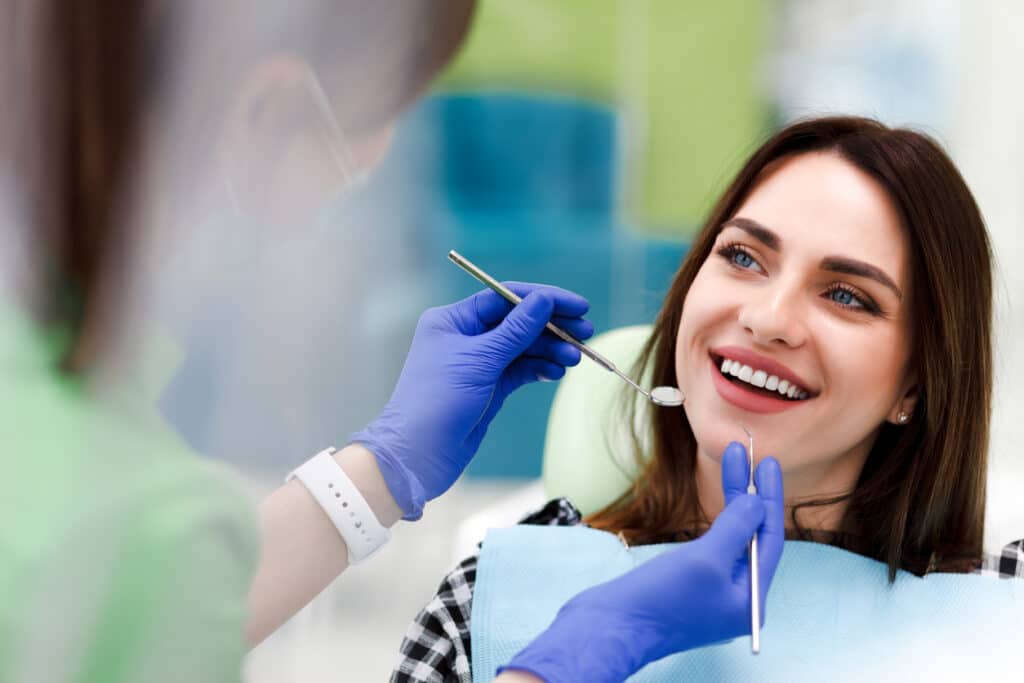
A dental cleaning frequency is a personalized, preventive schedule tailored to your specific oral health. Most healthy patients at Timber Family Dental require a standard prophylaxis cleaning every six months. However, if you have active gingivitis or a history of gum disease, you need a periodontal maintenance cleaning every three to four months. Medical literature supports that dental calculus forms through the mineralization of dental plaque [1] (Wei et al., 2024).
How Your Daily Diet Influences Your Cleaning Schedule
Your diet directly affects how quickly plaque builds up on your teeth. If you sip sweet tea all day or grab a daily specialty coffee from your favorite spot in downtown Garner, you expose your enamel to constant sugar and acid. Clinical evidence supports that Diet plays a pivotal role in the development of enamel hypoplasia in children [2] (Meena et al., 2025). These elements fuel the bacteria in your mouth. If you consume a high amount of carbohydrates and acidic drinks, tartar accumulates much faster than average. In these cases, Dr. Byrd or Dr. Barbaro might suggest coming in slightly sooner than the standard six months to keep that accelerated bacterial buildup safely under control.
Navigating Cleanings During Clear Aligner Treatment
Straightening your teeth changes your daily hygiene requirements. If you are currently wearing clear aligners, your plastic trays trap saliva, food particles, and bacteria tight against your gums for 22 hours a day. This trapped environment accelerates plaque formation. Medical literature indicates that maintaining the cleanliness of orthodontic aligners is crucial for oral hygiene and preserving the optical properties of aligners [3] (Alweneen et al., 2025). During active orthodontic treatment, keeping your enamel clean is critical to avoid white spot lesions or sudden cavities. We often recommend a targeted professional cleaning every four months while you wear your trays. This proactive step helps keep your newly straightened smile healthy.
Comparisons: 6-Month Prophylaxis vs. Periodontal Maintenance
Understanding the difference between standard and accelerated cleaning schedules helps you plan your year. Here is a breakdown based on Cost, Durability, and Maintenance Level.
Service Type | Primary Purpose | Cost Expectation | Durability (Health Outcome) | Maintenance Level |
Standard Prophylaxis (6 Months) | Routine maintenance for patients with existing healthy gums. | Low (Usually 100% covered by preventive dental insurance). | High (Maintains baseline health and prevents initial tartar buildup). | Low (Requires standard daily brushing and flossing). |
Gingivitis Therapy (4 Months) | Reverses early gum inflammation before bone loss occurs. | Moderate (Often partially covered; small out-of-pocket copay). | High (Heals bleeding gums and restores tissue health). | Moderate (Requires improved flossing habits at home). |
Periodontal Maintenance (3 Months) | Manages irreversible gum disease after a deep cleaning. | Moderate (Requires more frequent visits to protect bone density). | Moderate to High (Stops the active spread of periodontal disease). | High (Requires daily use of water flossers and specific rinses). |
Why Medical Changes Require More Frequent Dental Visits
Your oral health is directly connected to your total body wellness. Your mouth responds to a major biological transition. Pregnancy gingivitis is a common condition among expectant mothers caused by sudden spikes in hormones that make the gums very sensitive and prone to bleeding. Similarly, patients managing conditions like diabetes face a higher risk of rapid periodontal inflammation. If your medical history changes, a proactive three-month cleaning schedule safely manages this new vulnerability and protects your immune system.
Signs You Need to Bump Up Your Next Cleaning Appointment
You do not have to wait for your calendar reminder to get professional care. Sometimes, your mouth gives you clear signals that tartar is taking over. If you suddenly notice persistent bad breath, a rough texture on the back of your lower teeth, or gums that ache after flossing, do not ignore it. These are early warning signs of an active bacterial infection. Pushing your appointment off just to hit the six-month mark gives that infection time to spread. Reaching out for an early refresh stops the issue immediately.
Maximizing Your At-Home Care Between Professional Cleanings
The best way to maintain a standard six-month cleaning schedule is by upgrading your routine at home. Manual toothbrushes often miss the tight spaces where tartar starts. Switching to a sonic electric toothbrush breaks up daily plaque with superior precision. Additionally, incorporating a water flosser easily flushes out the hidden food debris that traditional string floss leaves behind. By investing a few extra minutes into your morning and evening routines, you ensure your next hygiene visit at Timber Family Dental is fast, easy, and completely pain-free.
FAQs
1. Can I just get a dental cleaning once a year if I brush every day?
No. Even with perfect brushing and flossing, your toothbrush cannot reach every microscopic groove in your enamel or just below the gum line. Going a full year allows missed plaque to harden into tartar, leading to decay and gum disease. A professional cleaning every six months is the minimum requirement for a healthy mouth.
2. How often should I get my teeth cleaned if I have active gingivitis?
If you have active gingivitis, you should schedule a professional cleaning every three to four months. This 90-120 day period is needed to stop the bacterial growth, reduce inflammation, and give your gum tissue the time it needs to heal before the infection worsens.
3. Does my dental insurance cover a cleaning every 3 months?
It is contingent upon the policy you may have. Many plans offer enhanced periodontal benefits that include up to four cleanings per year for patients diagnosed with gum disease. Our front desk team will verify your specific coverage and submit the claims on your behalf to maximize your benefits.
References
[1] Wei, Y., Dang, G. P., Ren, Z. Y., Wan, M. C., Wang, C. Y., Li, H. B., Zhang, T., Tay, F. R., & Niu, L. N. (2024). Recent advances in the pathogenesis and prevention strategies of dental calculus. NPJ biofilms and microbiomes, 10(1), 56. https://doi.org/10.1038/s41522-024-00529-1
[2] Meena, M., Aijazuddin, A., Kumawat, R., Saxena, S., Rajput, T., & Jaidupally, R. R. (2025). Assessing the Impact of Diet on Enamel Hypoplasia in Children. Journal of pharmacy & bioallied sciences, 17(Suppl 2), S1972–S1974. https://doi.org/10.4103/jpbs.jpbs_1818_24
[3] Alweneen, A., & Alqahtani, N. (2025). The Effectiveness of Different Cleaning Methods for Clear Orthodontic Aligners: Impacts on Physical, Mechanical, and Chemical Properties-An In Vivo Study. Polymers, 17(12), 1620. https://doi.org/10.3390/polym17121620