
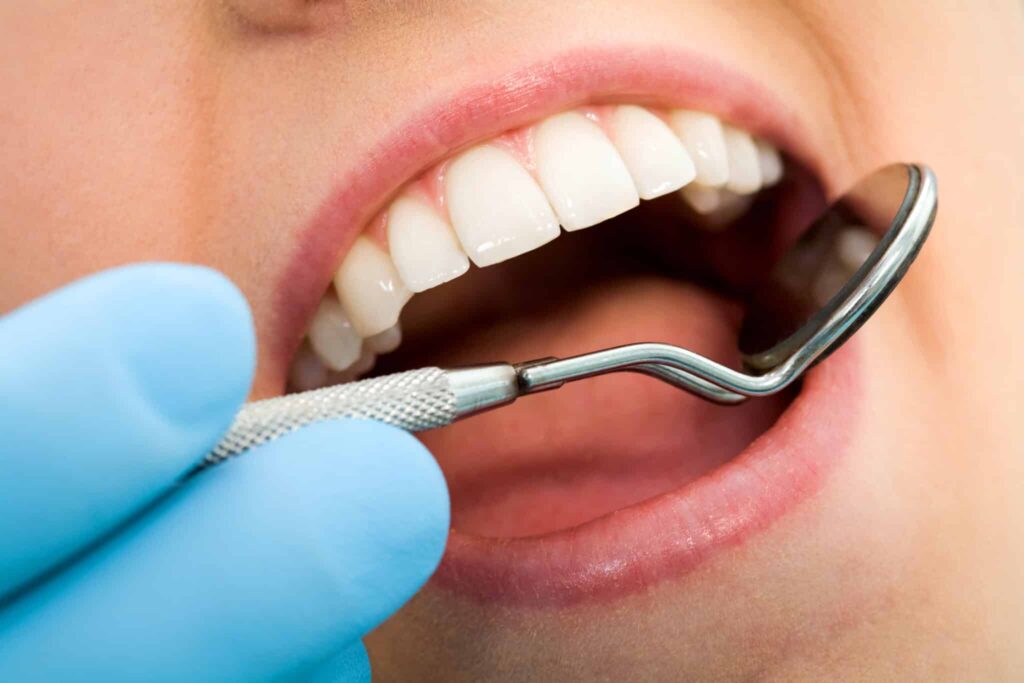
A gentle teeth cleaning for sensitive teeth at Timber Family Dental is a customized preventive dental procedure that utilizes warm water scaling, topical desensitizers, and modified hand instruments to safely remove plaque. Medical evidence supports that desensitizers significantly reduce dentin permeability by changing the morphology of the dentin surface and/or dentinal tubules [1] (Yilmaz et al., 2017). This tailored approach ensures patients with enamel wear or gum recession receive comfortable, pain-free oral care without triggering nerve sensitivity.
Prepare Your Smile at Home Before Your Visit
A comfortable dental cleaning actually starts weeks before you ever sit in our chair. You can calm your dental nerves right from your bathroom sink. Switch to a toothpaste formulated with potassium nitrate at least two weeks before your appointment. This ingredient actively soothes the nerve endings inside your teeth. Clinical evidence indicates that Potassium Nitrate has been used as a desensitizing agent to treat dentinal hypersensitivity [2] (Sharma et al., 2012). Next, check your toothbrush. You should only use soft bristles. Hard bristles physically scrub away your protective enamel and irritate your gum tissue, making your teeth extra sensitive to our clinical tools. Finally, on the morning of your visit, skip the acidic orange juice or hot coffee. Acid temporarily softens your enamel, which heightens nerve sensitivity when our hygienist begins polishing your teeth.
Identifying Your Specific Sensitivity Triggers
Not all tooth sensitivity is the same. To give you the best care, we need to know exactly what bothers you. Pay close attention to your teeth throughout your day. Do you feel a sharp ache when you drink an ice-cold glass of water? Do you wince when breathing in cold winter air? Or does the pain only happen when you press down on a specific tooth with your finger? Some patients are triggered by the cold water from our ultrasonic scaler, while others are sensitive to the small burst of air we use to dry the tooth. When you tell us your exact trigger, we instantly modify our tools. If the air syringe bothers you, we use cotton swabs to dry your teeth instead. Knowing your triggers allows us to build a custom roadblock against your pain.
The Link Between Nighttime Grinding and Cleaning Pain
You might think your teeth are just naturally sensitive, but your sleep habits often play a hidden role. If you wake up with frequent headaches or a sore jaw, you likely grind your teeth at night. The heavy pressure from nighttime grinding causes your teeth to flex. Over time, this flexing chips away the thin layer of enamel right at your gumline. Medical evidence supports that bruxism may cause considerable damage to teeth and dental work, leading to morning jaw pain, temporal headaches, and restricted motion of the temporomandibular joint [3] (Lal et al., 2024). This creates a small, V-shaped notch called an abfraction. Because the enamel is gone, the sensitive root is left completely exposed. When a dental instrument grazes this notch during a routine cleaning, you feel a sharp jolt. We check for these notches during your exam. By fitting you for a custom nightguard, we stop the enamel damage in its tracks and make your future cleanings much more comfortable.
Comparisons: Finding the Right Level of Care
Understanding the difference between a sensitive cleaning and more intensive treatments helps you know exactly what to expect. Here is how your options compare based on Cost, Durability, and Maintenance Level.
Service Type | Primary Purpose | Cost Expectation | Durability (Care Lifespan) | Maintenance Level |
Sensitive Standard Cleaning | Plaque removal using warm water and desensitizing gels. | Low (Usually 100% covered by preventive PPO plans). | Moderate (Keeps healthy gums stable; requires visits every 6 months). | Low (Standard daily brushing with sensitive toothpaste). |
Deep Cleaning (SRP) | Treats active gum disease by cleaning deep pockets below the gumline. | Moderate (Often 50-80% covered by insurance; requires local anesthetic). | High (Halts bone loss and active periodontal disease). | High (Requires transitioning to 3-month maintenance visits). |
Skipping the Dentist | Avoiding care to escape the temporary discomfort of sensitive teeth. | Zero upfront, but very high later. | Low (Leads to deep decay, worsening recession, and eventual tooth loss). | High (Will require root canals, extractions, or expensive restorative surgery). |
Post-Cleaning Relief With Targeted Fluoride Varnish
After we safely remove the hardened tartar, your teeth might feel slightly exposed to the air. We do not want you leaving our Garner clinic with lingering sensitivity. To prevent post-cleaning discomfort, we apply a professional-grade fluoride varnish at the very end of your visit. This varnish does much more than just prevent cavities. It acts as a biological sealant. The clear, sticky formula bonds directly to your exposed roots, plugging up the microscopic pores that lead to your tooth nerves. This blocks hot and cold temperature signals from reaching the center of your tooth. You leave our office with a strong, protective shield that keeps your smile feeling normal and pain-free for months.
Empowering You in the Chair: The "Stop Signal"
A large part of dental anxiety comes from feeling trapped in the chair while someone works inside your mouth. We believe you should always remain in total control of your appointment. Before we pick up a single dental instrument, we establish a physical “stop signal” with you. Typically, we ask you to simply raise your left hand. If you feel a sudden flash of sensitivity, need to swallow, or just want a mental break, you raise your hand. We stop working immediately. By giving you the power to pause the appointment at any second, your brain naturally relaxes. You know you are driving the pace of your own healthcare.
FAQs
1. Can I ask to be numbed for a standard teeth cleaning?
Yes. While a standard cleaning usually does not require the strong local anesthetic injections used for fillings or deep cleanings, we have options. We can apply professional-strength topical numbing gels to specific sensitive areas, or use a mild numbing rinse to keep you comfortable without leaving your whole face numb for hours.
2. Why are only my bottom front teeth sensitive when scraped?
The bottom front teeth are where saliva pools in your mouth, making them the most common place for hard tartar (calculus) to build up quickly. Because tartar often pushes the gums down, the hygienist has to clean carefully around exposed roots in this spot, which can trigger localized nerve sensitivity.
3. Does sensitive toothpaste actually help before my dental visit?
Absolutely. Toothpastes formulated for sensitivity contain potassium nitrate, which actively blocks pain signals traveling to your dental nerves. If you use a sensitive toothpaste twice a day for two weeks before your appointment at Timber Family Dental, your teeth will be significantly calmer and much easier to clean.
References
[1] Yilmaz, N. A., Ertas, E., & Orucoğlu, H. (2017). Evaluation of Five Different Desensitizers: A Comparative Dentin Permeability and SEM Investigation In Vitro. The open dentistry journal, 11, 15–33. https://doi.org/10.2174/1874210601711010015
[2] Sharma, S., Shetty, N. J., & Uppoor, A. (2012). Evaluation of the clinical efficacy of potassium nitrate desensitizing mouthwash and a toothpaste in the treatment of dentinal hypersensitivity. Journal of clinical and experimental dentistry, 4(1), e28–e33. https://doi.org/10.4317/jced.50665
[3] Lal SJ, Sankari A, Weber, DDS KK. Bruxism Management. [Updated 2024 May 1]. In: StatPearls [Internet]. Treasure Island (FL): StatPearls Publishing; 2026 Jan-. Available from: https://www.ncbi.nlm.nih.gov/books/NBK482466/