The cost of a single dental implant without insurance in Garner, NC, is usually $3,000 to $5,000 out of pocket. Additionally, clinical research indicates that although 60% expressed interest in implants, 45% perceived them as too expensive [1] (Kaur et al., 2024). This total includes the surgical titanium post, the connecting abutment, and the final custom crown. The price at Timber Family Dental depends on the prep work needed (bone grafting, etc.) and your dental insurance benefits.
What Are You Really Paying For? Unbundling the Bill
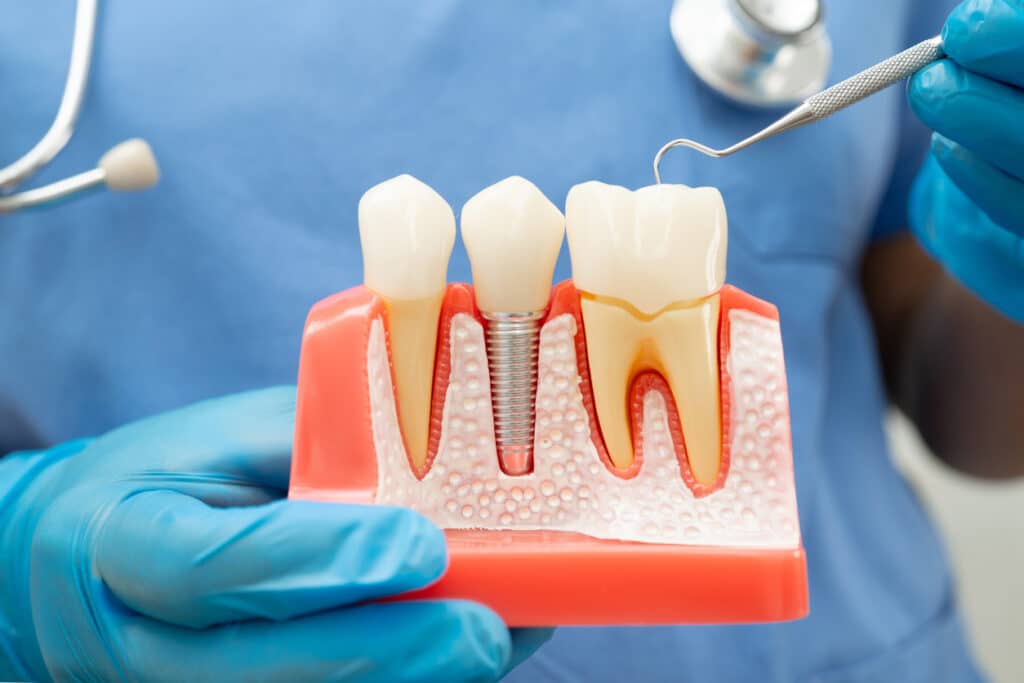
When you look at a dental implant estimate, the total number can feel overwhelming. Understanding what goes into that fee gives you peace of mind. You are not buying a single product off a shelf. An implant is a customized, three-part system engineered to mimic a natural tooth.
- The Titanium Post: This artificial root is surgically placed into your jawbone. It makes up the largest portion of the surgical fee.
- The Abutment: This small connector piece attaches to the top of the titanium post once your jaw has fully healed. Notably, medical evidence supports that Implant abutments serve as the critical interface between dental implants and prosthodontic restorations [2] (Prpic et al., 2025).
- The Custom Crown: This is the visible, tooth-colored ceramic top that matches your natural smile.
Your estimate may also include necessary prep work. If you have been missing a tooth for years, your jawbone may have shrunk. A minor bone graft adds a small upfront cost but provides a secure foundation for your new tooth. We also use advanced 3D CBCT imaging to map your jaw before surgery.
Phased Billing: How the Timeline Helps Your Budget
One of the best financial advantages of a dental implant is the timeline. Because the process requires your body to heal, you do not have to pay the full price all at once. The treatment happens in distinct phases. First, you pay for the surgical placement of the post. After this step, you enter a healing period lasting three to four months. During this window, you pay nothing. Once your jawbone securely fuses to the titanium, you return for the final abutment and crown, which is billed as a separate restorative phase. This natural pause gives you months to save up or shift funds in your Health Savings Account (HSA). If your treatment crosses the new year, you can split the procedure across two annual insurance maximums, significantly lowering your out-of-pocket expenses.
The Financial ROI: Implants vs. Traditional Restorations
When choosing a tooth replacement, you must look beyond the initial price tag. Here is a breakdown of your options based strictly on long-term financial value, durability, and maintenance costs.
Restoration Type | Upfront Out-of-Pocket Cost | Durability (Financial Lifespan) | Long-Term Maintenance Cost |
Dental Implant | High (Average $3,000 – $5,000 without insurance). | Maximum (Titanium posts often last 20+ years to a lifetime). | Low (Standard brushing; no special cleaning solutions required). |
Dental Bridge | Moderate (Usually 50% covered by major PPO insurance). | Moderate (Must be replaced every 10 to 15 years due to natural wear). | High (Requires purchasing specialized floss threaders and future replacements). |
Partial Denture | Low (Most affordable initial option). | Low (Requires frequent relining as your gum tissue shrinks over time). | High (Ongoing costs for denture adhesives and specialized soaking cleansers). |
Navigating Cost & Financing in Garner
If you are uninsured or your current plan does not cover oral surgery, you still have accessible pathways to restore your bite. Many local Wake County employers provide Flexible Spending Accounts (FSA) or Health Savings Accounts (HSA). You can use these pre-tax dollars to cover your implant surgery and custom crown. If you prefer to spread out the cost, we proudly accept CareCredit. This third-party lender allows you to divide the total bill into manageable, interest-free monthly payments. Whether you are picking up groceries at White Oak Crossing or commuting down Timber Drive, you can easily manage a low monthly payment without disrupting your daily lifestyle.
FAQs
1. Why does my insurance pay for the crown but not the surgical post?
Many traditional PPO dental plans still classify the surgical placement of an implant post as an “elective” procedure, but they classify the final ceramic crown as a “major restorative” necessity. Our administrative team will advocate for you, bill your insurance for the crown and any extractions, and help you maximize every available benefit dollar.
2. Are the cheap $399 implant billboards a scam?
Often, yes. Volume-based clinics advertise a low “teaser” rate that covers only the titanium post. Once you are in the chair, you are hit with surprise bills for the required 3D X-rays, the abutment, and the crown, bringing the actual cost right back to the regional average. We believe in transparent, all-inclusive estimates.
3. Does Medicare cover dental implants for seniors?
Standard Medicare (Parts A and B) does not cover routine or restorative dental care, including implants. However, some Medicare Advantage (Part C) plans offer supplemental dental benefits that may offset part of the cost. Bring your card to your consultation, and we will gladly verify your exact coverage limits.
References
[1] Kaur, M., Chamakuri, K., Parashar, P., Hiten Shah, C., Singh, P., & Touchan, L. (2024). Awareness, attitudes and cost among patients for dental implants in teeth replacement. Bioinformation, 20(10), 1358–1362. https://doi.org/10.6026/9732063002001358
[2] Prpic, V., Kosec, P., Skec, S., & Catic, A. (2025). Influence of Design Parameters on Implant Abutment Performance: A Scoping Review. Journal of functional biomaterials, 16(9), 342. https://doi.org/10.3390/jfb16090342