
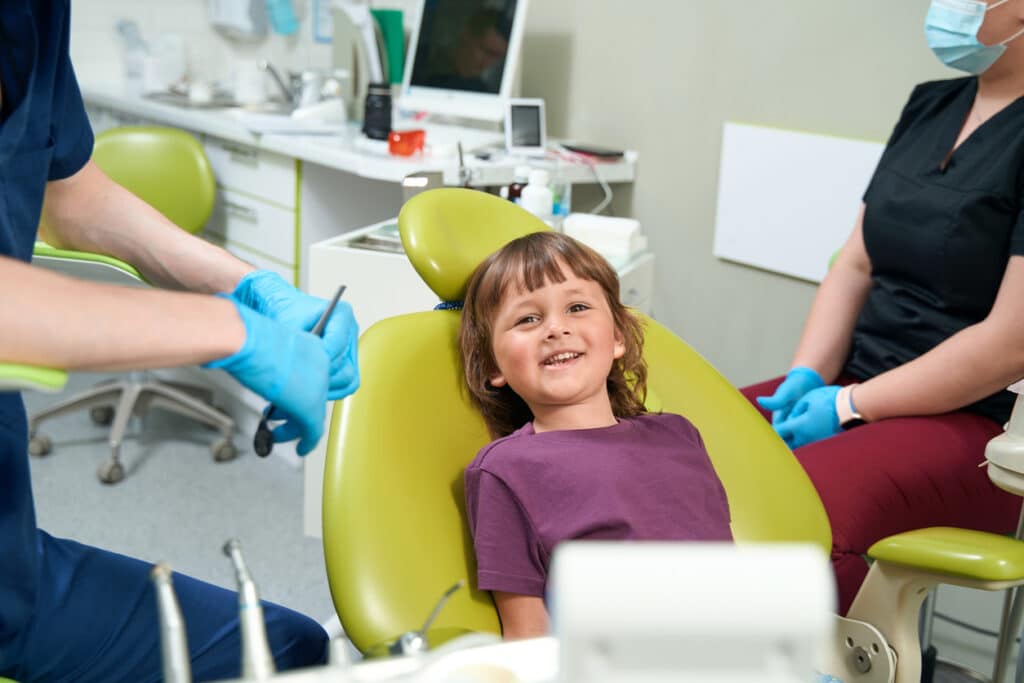
Clinical literature supports that life-threatening medical emergencies can occur in dental practice [1] (Vranic et al., 2016). A pediatric dental emergency, such as a toothache, is an urgent clinical condition that can require immediate assessment to relieve severe pain, prevent infection from spreading, and protect the underlying adult teeth. Immediate care involves safe diagnosis, gentle pain management, and restoring the affected primary or permanent tooth.
Teething Pain vs. A True Dental Emergency
Parents often struggle to distinguish normal teething pain from a serious infection. When your child’s primary molars begin erupting, they typically experience dull, widespread gum soreness. This is normal. Medical evidence indicates that teething is uncomfortable for the child [2] (Wuni et al., 2024). However, a true dental emergency usually presents as sharp, localized pain in one specific tooth. To check the difference, gently look inside your child’s mouth with a flashlight. If you see a dark spot on a tooth, a cracked edge, or a small, pimple-like bump on the gums, that is not teething. If you notice any of these signs along with a sudden fever, call our clinic right away for a clinical evaluation.
How to Keep Your Child Hydrated When Chewing Hurts
When a tooth throbs, your child will likely refuse to eat or drink. Dehydration quickly becomes a secondary concern. While you wait for your emergency appointment at Timber Family Dental, we recommend managing their diet safely. Avoid anything extremely hot or ice-cold, as extreme temperatures can trigger the pain. Skip sugary fruit juices that feed the cavity-causing bacteria. Instead, offer lukewarm chicken broth, plain yogurt, or room-temperature water. Have them drink straight from a cup or use a spoon. Do not let them use a straw, as the physical suction can create painful pressure inside a damaged tooth.
Comparisons: Pediatric Emergency Treatments
Understanding how we treat childhood toothaches helps you feel confident in the exam room. Here is a breakdown of common emergency interventions for kids based on Cost, Durability, and Maintenance Level.
Treatment Type | Primary Purpose | Cost Expectation | Durability (Care Lifespan) | Maintenance Level |
Pediatric Composite Filling | Excavates the cavity, stops the pain, and protects the nerve. | Low (Usually heavily covered by pediatric PPO plans). | High (Lasts until the baby tooth naturally falls out). | Low (Standard brushing and flossing twice a day). |
Pulpotomy (Baby Root Canal) | Removes infected nerve tissue in the chamber while saving the natural tooth structure. | Moderate (Often requires a protective pediatric crown). | High (Preserves the space for the adult tooth). | Low (Requires standard daily hygiene). |
Extraction + Space Maintainer | Removes an unsalvageable tooth and holds the gap open for adult teeth. | Moderate (Partial insurance coverage; prevents future crowding). | Moderate (The device stays in until the adult tooth erupts). | High (Requires careful brushing around the metal appliance). |
Calming Your Child's Fears Before the Dental Visit
A hurting child is usually a scared child. When they are already in pain, the idea of visiting a doctor can feel overwhelming. As a parent, your reaction sets the tone for their visit. You can significantly reduce their anxiety by controlling your own stress and choosing your words carefully. Clinical literature suggests that audio distraction effectively alleviates anxiety in pediatric dental patients [3] (Singh et al., 2014). Do not use words such as “shot,” “drill,” or “pull.” Instead, frame the visit positively. Tell your child that Dr. Byrd or Dr. Barbaro will wash the sugar away and help their mouth feel better. By projecting confidence on the drive over, you help your child feel safe. Once you arrive, our clinical team takes over with specialized, child-friendly techniques to keep them relaxed.
Why You Should Never Wait for a Hurting Baby Tooth to Fall Out
A common misconception among parents is that a decaying baby tooth is not a big deal. You might think, “It will just fall out in a year anyway, so why fix it?” This dangerous myth can cost you more money in the future. Primary teeth act as physical placeholders for the permanent teeth developing underneath. If you ignore a deep cavity, the infection can travel down the root and permanently stain or damage the adult tooth before it erupts. Also, if a primary tooth falls out too early due to decay, the surrounding teeth will shift into the empty space. This shifting can block the adult tooth from coming in straight, often requiring expensive orthodontic treatment later.
Post-Treatment Care: Returning to School and Normal Life
Getting your child out of pain is our first goal, but getting your family back to your normal routine is just as important. After we treat the infected tooth, your child will feel profound relief almost immediately as the numbing wears off. We recommend a soft-food diet for 24 hours to let the gums rest. Most children are ready to return to their normal activities by the very next morning. Our administrative team will provide an official medical excuse note for the Wake County Public School System, ensuring your child’s absence is fully excused while you prioritize their health.
FAQs
1. Can I use adult topical numbing gel on my child's hurting tooth?
No. You should never use over-the-counter adult numbing gels containing benzocaine on young children. These gels can cause a rare but serious condition that affects blood oxygen levels. Stick to warm saltwater rinses and pediatric ibuprofen, and contact our office for a safe clinical diagnosis.
2. Is a toothache an emergency if my child only complains about it at night?
Yes. Nighttime toothaches are a classic clinical sign of pulpal inflammation. When your child lies down to sleep, blood flow to the head increases, putting extra pressure on the infected tooth nerve. If the pain wakes them up, it requires immediate professional attention.
3. Will my child need a shot for their emergency treatment?
We prioritize your child’s comfort above all else. If anesthetic is necessary, we use a gentle “tell-show-do” approach and specialized topical numbing gels to desensitize the gum tissue first.
References
[1] Vranić, D. N., Jurković, J., Jeličić, J., Balenović, A., Stipančić, G., & Čuković-Bagić, I. (2016). Medical Emergencies in Pediatric Dentistry. Acta stomatologica Croatica, 50(1), 72–80. https://doi.org/10.15644/asc50/1/10
[2] Wuni, A., Iddrisu, M., Angliengmene, A. A., Salia, S. M., Chanayireh, L., Mohammed, I. S., Musah, A., Ibrahim, M. M., Kpentey, A. A., Kwarteng, C., Nyarko, B. A., & Doat, A. R. (2024). Knowledge and management practices of infant teething symptoms among mothers in a tertiary facility in Ghana. The Pan African medical journal, 47, 65. https://doi.org/10.11604/pamj.2024.47.65.40792
[3] Singh, D., Samadi, F., Jaiswal, J., & Tripathi, A. M. (2014). Stress Reduction through Audio Distraction in Anxious Pediatric Dental Patients: An Adjunctive Clinical Study. International journal of clinical pediatric dentistry, 7(3), 149–152. https://doi.org/10.5005/jp-journals-10005-1254