
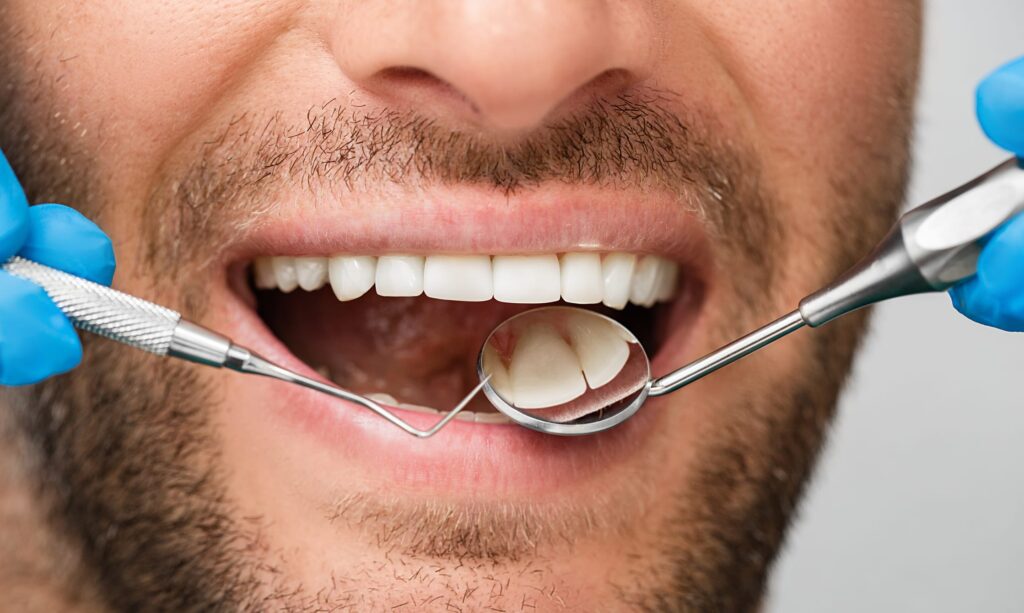
A comprehensive new patient dental exam at Timber Family Dental is an extensive clinical evaluation of your baseline oral health. Medical literature supports that Oral health is essential for the overall health and well-being of adults [1] (Oral Health in America, 2021). This diagnostic visit includes a full-mouth series of low-radiation X-rays, periodontal pocket measurements, a structural tooth analysis, an oral cancer screening, and a collaborative treatment-planning session with your dentist.
How We Eliminate Sensory Overload in the Exam Room
For many patients, the worst part of a dental visit is not the care itself, but the sensory overload. Bright lights, sharp scraping noises, and the feeling of being rushed quickly trigger anxiety. Medical evidence indicates that sensory adaptive dental environments (SADE) could be a promising intervention for reducing dental anxiety among children and young adults [2] (Reynolds et al., 2023). During your comprehensive exam, we intentionally slow down the pace and control the environment. We offer protective dark glasses to shield your eyes from our clinical lights. If we need to clean a tooth surface to get a better look, we use quiet electric handpieces rather than whining air-driven tools. You dictate the speed of the appointment. If you need a moment to breathe or ask a question, you simply raise your hand, and we pause immediately.
Your Intraoral Camera Tour: Seeing What Your Dentist Sees
Clinical evidence indicates that periodontal health impacts systemic health, and vice versa [3] (Kapila, 2021). You should never have to take a diagnosis on blind faith. A core part of our new patient exam includes a live, guided tour of your mouth using a high-definition intraoral camera. This wand is the size of a toothbrush and captures detailed video of your teeth. We project this video onto a monitor right in front of you. If you have a hidden crack on a back molar or a leaking silver filling, we point it out on the screen. By reviewing the physical evidence together, you can make confident, informed choices about your next steps.
Beyond Cavities: Systemic Health Clues We Look For
Your mouth mirrors the rest of your body. During a comprehensive evaluation, we look far beyond simple tooth decay. We watch for signs of systemic medical conditions that often show up in the mouth first. For example, if we see major erosion of the back side of your front teeth’s enamel, we can detect silent acid reflux. If your gum tissue looks very inflamed despite good brushing habits, it might be a red flag for pre-diabetes. We also evaluate your airway and tongue resting position for signs of sleep apnea. Noticing these signs early protects your general physical health.
Comparisons: Understanding Exam Types
Knowing the right exam type helps you book the correct appointment. Here is a breakdown by cost, Durability (Diagnostic Value), and Maintenance Level.
Exam Type | Primary Purpose | Cost Expectation | Durability (Diagnostic Value) | Maintenance Level |
Comprehensive Exam (New Patient) | Establishes a complete baseline for new patients or those returning after a 3+ year absence. | Low (Typically 100% covered by PPO insurance). | High (Sets a long-term clinical roadmap for your health). | Low (Transitions you into routine maintenance). |
Periodic Exam (Recall Checkup) | Evaluates recent changes in your mouth since your last 6-month cleaning. | Low (Typically 100% covered by PPO insurance). | Moderate (Maintains the baseline set by your comprehensive exam). | Low (Requires standard at-home brushing and flossing). |
Limited Exam (Emergency Visit) | Focuses exclusively on a single, specific issue, like a broken tooth or active pain. | Moderate (Partial insurance coverage; out-of-pocket costs vary). | Variable (Solves an immediate crisis but ignores the rest of the mouth). | High (Always requires follow-up visits for permanent restoration). |
The "No-Pressure" Treatment Plan Presentation
A major fear for new patients is the “hard sell.” You might worry that booking a thorough exam means you will be pressured into buying expensive cosmetic upgrades before you leave. At Timber Family Dental, our presentation process is strictly educational. After we gather your clinical data, your doctor sits down with you to review the findings. If you need restorative work, we divide your needs into clear, color-coded phases. We prioritize active infections and pain first, and place elective or cosmetic treatments on a separate, future timeline. You leave with a printed copy of your roadmap to review at home. You never face financing pressure in our clinic.
Morning Prep: What to Do Before You Sit in the Chair
Getting the most accurate results from your baseline exam requires just a little bit of morning preparation. First, brush and floss your teeth normally, but do not aggressively over-brush. Scrubbing too hard right before your visit can temporarily inflame your gums, which gives us a false reading when we measure your periodontal pockets. Second, drink plenty of water. A well-hydrated mouth makes the tissue exam much more comfortable. Finally, write down a complete list of your current daily medications and supplements. Many standard prescriptions cause severe dry mouth, which directly increases your risk for rapid tooth decay. Knowing your medication list helps us customize your preventive plan.
FAQs
1. Does a new patient exam include a teeth cleaning on the same day?
Typically, yes. If your periodontal measurements show that you have healthy gums (pockets measuring 1 to 3 millimeters), we usually complete a standard preventive cleaning during the same visit. However, if the exam reveals active gum disease, we will pause and schedule a specialized deep cleaning for a later date to ensure you get the exact care your body needs.
2. How long does a comprehensive dental exam take?
You should plan to spend about 60 to 90 minutes at our clinic for your first visit. This allows plenty of time for taking digital X-rays, completing the full diagnostic evaluation, and answering every question you have during your one-on-one consultation.
3. Will the dentist check my jaw for TMJ issues during this visit?
Yes. Your bite alignment is a major part of your comprehensive exam. If you wake up with headaches or experience a clicking sound when you chew, let us know. We will evaluate your temporomandibular joint (TMJ) and check your enamel for signs of nighttime teeth grinding.
References
[1] Oral Health in America: Advances and Challenges [Internet]. Bethesda (MD): National Institute of Dental and Craniofacial Research(US); 2021 Dec. Section 3A, Oral Health Across the Lifespan: Working-Age Adults. Available from: https://www.ncbi.nlm.nih.gov/books/NBK578294/
[2] Reynolds, K., Chimoriya, R., Chandio, N., Tracey, D., Pradhan, A., Fahey, P., Stormon, N., & Arora, A. (2023). Effectiveness of sensory adaptive dental environments to reduce psychophysiology responses of dental anxiety and support positive behaviours in children and young adults with intellectual and developmental disabilities: a systematic review and meta-analyses. BMC oral health, 23(1), 769. https://doi.org/10.1186/s12903-023-03445-6
[3] Kapila Y. L. (2021). Oral health’s inextricable connection to systemic health: Special populations bring to bear multimodal relationships and factors connecting periodontal disease to systemic diseases and conditions. Periodontology 2000, 87(1), 11–16. https://doi.org/10.1111/prd.12398