
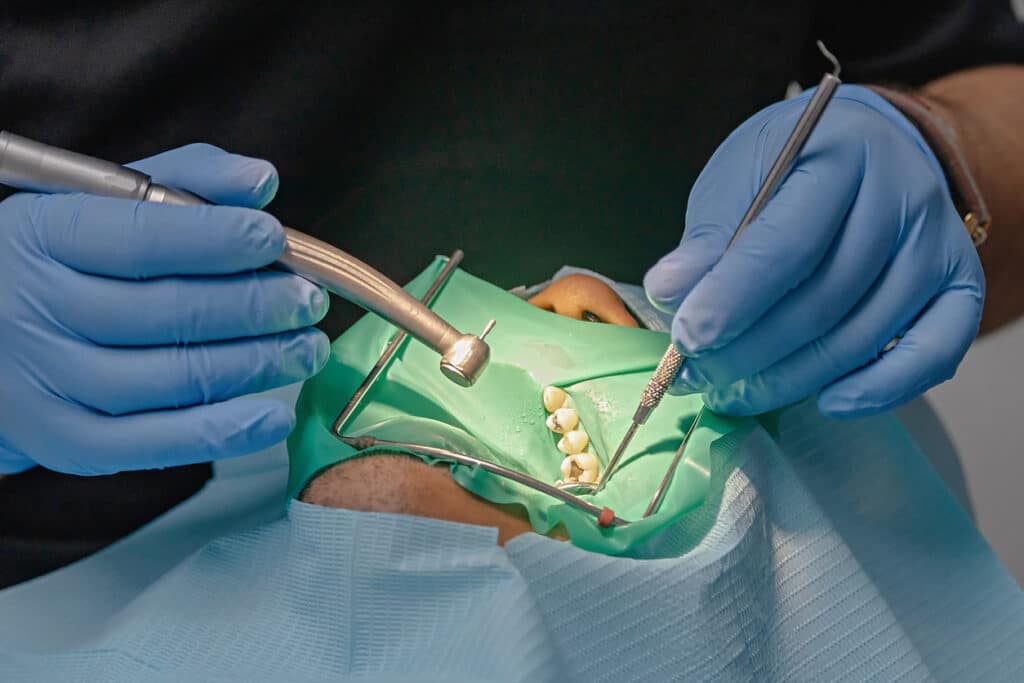
Medical literature supports that restorative dentistry is a specialized form of dentistry that focuses on diagnosing, preventing, and treating dental diseases [1] (Alyahya, 2024). Timber Family Dental’s Dr. Colin Barbaro is trained in state-of-the-art 3D diagnostics to get you back to your natural bite function, structural integrity, and long-term oral health without unnecessary extractions.
Upgrading Old Metal Fillings to Modern Restorations
Clinical literature supports that, when there is suspicion of caries, high fillings, imperfections at the margins, and marginal cracks, the restoration should be completed [2] (Kirsch et al., 2016). Many patients walk around with old, dark silver fillings from decades ago. Over time, these metal patches expand and contract when you eat hot and cold foods. This constant shifting creates microscopic cracks in your remaining tooth structure, allowing hidden decay to sneak in. Dr. Barbaro specializes in safely removing failing amalgam fillings. He replaces them with biocompatible, tooth-colored materials like custom ceramic inlays. These modern restorations actually bond directly to your natural enamel. This precise process restores the original strength of your tooth while eliminating that dark, metallic look when you laugh.
How Restorative Dentistry Cures Chronic Jaw Pain
If you wake up with constant headaches or a sore jaw, your teeth might be the root cause. When you lose a tooth or suffer from severe enamel wear, your natural bite changes. Your jaw muscles have to work harder just to chew your food. This extra strain leads to chronic tension, joint clicking, and daily pain. By strategically rebuilding your worn teeth, Dr. Barbaro corrects your overall bite alignment. A balanced bite allows your jaw muscles to finally relax. Ultimately, restorative dentistry does not just fix your teeth; it often acts as a permanent solution for persistent facial discomfort.
Comparisons: Weighing Your Tooth Restoration Choices
Here’s how advanced restorative care compares with other common options in terms of Cost, Durability, and Maintenance Level.
Treatment Approach | Primary Purpose | Out-of-Pocket Cost Expectation | Durability (Care Lifespan) | Maintenance Level |
Comprehensive Restorative Care (Inlays/Bridges) | Rebuilds structural integrity and replaces missing teeth securely. | Moderate to High | High (10–15+ years with proper materials). | Low (Treat just like natural teeth). |
Patchwork Care (Large Fillings on weak teeth) | A quick, low-cost fix for a deeply compromised tooth. | Low | Low (Often cracks under heavy chewing pressure). | High (Frequent replacement required). |
Reactive Extraction (Pulling the tooth) | Removes the immediate pain but creates a permanent gap. | Moderate | Variable (Causes surrounding teeth to shift). | High (Requires a future implant or causes bite issues). |
Immediate Steps for Adult Dental Trauma and Broken Teeth
Medical literature supports that a structured approach and optimal diagnosis are important for triage for dental trauma [3] (Dubois et al., 2020). Whether you bite down too hard on an unpopped popcorn kernel or take a hit during a weekend sports league in Wake County, a broken tooth requires fast action. First, gently rinse your mouth with warm water to clean the area. Apply a cold compress to your cheek to help reduce swelling. Then, call Timber Family Dental right away. Dr. Barbaro sets aside specific time in his schedule for urgent structural repairs. By seeking prompt clinical care, you give our team the best possible chance to save the living nerve inside your damaged tooth.
Rebuilding Your Confidence for the Workplace and Beyond
Living with missing or damaged front teeth can take a heavy emotional toll. You might find yourself covering your mouth during business meetings or avoiding the camera at family gatherings. Reclaim your own freedom with professional rehabilitation. Dr. Barbaro customizes dental bridges and porcelain restorations that are natural-looking. When your smile is working properly, you can speak more clearly and chew with confidence. You gain the confidence to pursue that next career milestone or enjoy a night out without feeling self-conscious.
Daily Habits to Protect Your Complex Dental Restorations
Once Dr. Barbaro rebuilds your smile, you want those stunning results to last a lifetime. Taking care of dental bridges and custom onlays requires a few specific daily habits. First, consider investing in a quality water flosser. Targeted water pressure easily cleans out the hidden spaces under a dental bridge where regular string floss struggles to reach. Second, always wear a custom night guard if you clench or grind your teeth in your sleep. Constant nighttime grinding easily chips even the strongest dental porcelain. Finally, keep up with your proactive checkups at our Garner clinic so our team can verify the secure seal of your new restorations.
FAQs
1. Does a restorative dentist do root canals and implants?
Yes. Dr. Barbaro handles a wide range of complex procedures designed to save your teeth. If a tooth is infected, a root canal paired with a custom restoration is often the best way to preserve your natural root. If a tooth cannot be saved, he works closely with local Garner specialists to coordinate flawless implant restorations.
2. How long does a full-mouth restoration take?
The timeline will depend on your particular clinical needs. One restorative bridge could take two appointments a few weeks apart. If you need more complex work on multiple teeth and bite realignment, Dr. Barbaro will offer a clear, phased timeline during your consultation so you will know exactly what to expect.
3. What materials are used in modern dental restorations?
Dr. Barbaro uses high-quality dental porcelain and biocompatible materials such as zirconia. These materials are free of metal, highly durable, and reflect light just like your natural enamel, so your structural repair is visually seamless, too.
References
[1] Alyahya Y. (2024). A narrative review of minimally invasive techniques in restorative dentistry. The Saudi dental journal, 36(2), 228–233. https://doi.org/10.1016/j.sdentj.2023.11.005
[2] Kirsch, J., Tchorz, J., Hellwig, E., Tauböck, T. T., Attin, T., & Hannig, C. (2016). Decision criteria for replacement of fillings: a retrospective study. Clinical and experimental dental research, 2(2), 121–128. https://doi.org/10.1002/cre2.30
[3] Dubois L, Helmers R, Braun AK. Het belang van triage bij tandletsel: de verschillen tussen het ziekenhuis en de tandartspraktijk [The importance of triage in dental trauma. De differences between the hospital and dental practice]. Ned Tijdschr Tandheelkd. 2020;127(5):302-308. doi:10.5177/ntvt.2020.05.20009