
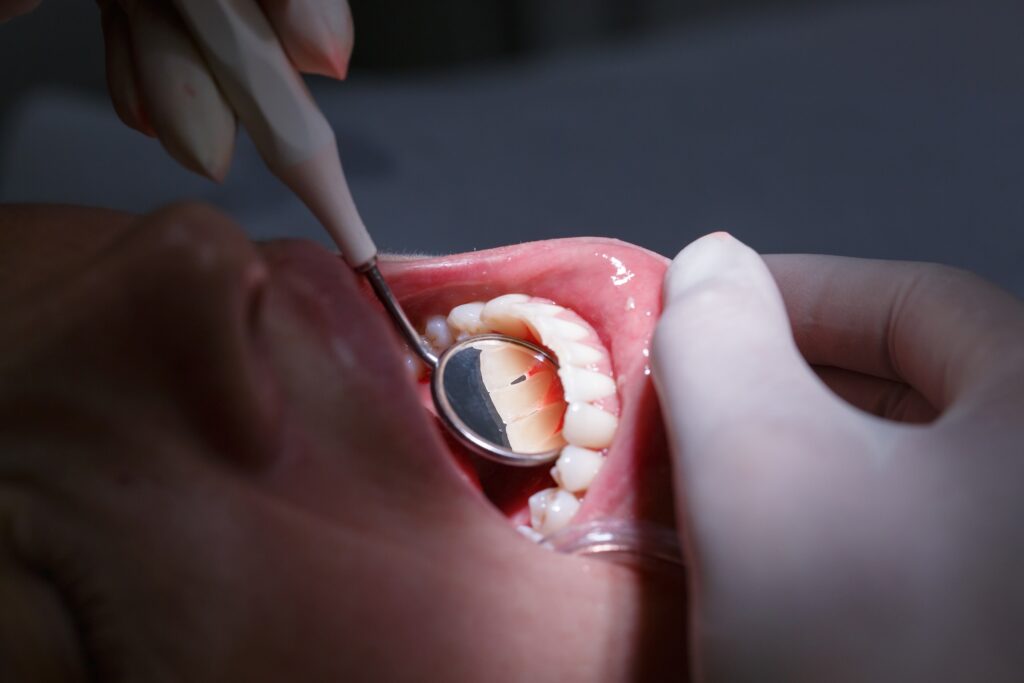
Emergency broken tooth repair is a specialized dental service that restores the structure, function, and appearance of a fractured tooth. The immediate treatment is clinical triage, management of localized pain, and placement of composite bonding or a custom protective crown to prevent nerve damage and bacterial infection. Additionally, medical evidence indicates that cracked teeth with normal pulp or reversible pulpitis have exhibited high pulp and tooth survival rates with the provision of direct or indirect composite restorations [1] (Kakka et al., 2022).
Managing Pain at Home From a Broken Tooth
When you hit the exposed nerve, you can get flashes of pain throughout your jaw from a broken tooth. While you are waiting for your emergency appointment with Timber Family Dental, you need safe ways to find relief. First, take an over-the-counter anti-inflammatory, such as ibuprofen. Clinical literature supports the safety and effectiveness of Ibuprofen in relieving postoperative dental pain in adults [2] (Pozzi et al., 2011). Avoid aspirin, as it can increase bleeding if your gums are also injured. Second, keep your head elevated with an extra pillow while sleeping, which helps prevent blood from pooling around the throbbing tooth. If the pain is sharp, you can pick up dental wax or clove oil from a local Garner pharmacy along Timber Drive. Clove oil acts as a natural numbing agent, and dental wax will cover any sharp, jagged edges so they do not cut your tongue.
Diagnosing the Damage: The 4 Types of Tooth Fractures
Not all dental breaks are the same. Understanding your specific injury helps you know what to expect when you sit in the clinical chair.
- Craze Lines: These are microscopic hairline cracks in the outer enamel. They cause no pain and require no treatment beyond standard checkups.
- Fractured Cusp: A piece of the chewing surface breaks off. It rarely damages the nerve, meaning we can usually fix it quickly with a simple crown or bonding. Medical evidence indicates that complete cusp fracture is a common phenomenon in dental practice and that it differs with respect to tooth type [3] (Fennis et al., 2002).
- Cracked Tooth: The crack extends from the chewing surface down toward the root. If the crack has not reached the gum line, we can save the tooth.
- Split Tooth: The tooth separates into two distinct pieces. In this severe case, the tooth cannot be saved intact, and we will safely extract it and discuss a durable dental implant.
Safe Eating Guidelines When You Have a Damaged Tooth
You will likely get hungry while waiting for your emergency dental visit, but eating the wrong foods can easily make your fracture worse. You must avoid chewing on the side of your mouth with the broken tooth. Stay away from extreme temperatures; ice water or hot coffee will send a painful jolt straight to the exposed dentin. You must also skip crunchy, sticky, or tough foods. This is not the time to enjoy hard crusts from your favorite local Garner pizza spot or chewy protein bars. Instead, stick to a strict soft-food diet. Applesauce, yogurt, scrambled eggs, and lukewarm soups will keep you full without putting dangerous pressure on your compromised enamel.
Comparisons: Where Should You Go for Care?
Patients often panic and make costly decisions when dental trauma occurs. Here is a breakdown of your treatment options based on Cost, Durability (Health Outcome), and Maintenance Level.
Action Taken | Primary Purpose | Cost Expectation | Durability (Health Outcome) | Maintenance Level |
Emergency Dental Visit | Direct structural repair of the broken enamel and nerve protection. | Moderate (Frequently covered by dental insurance). | High (Restores the tooth for 10-15+ years). | Low (Standard brushing and flossing). |
Hospital Emergency Room | Managing severe medical trauma, airway issues, or systemic infections. | High (Standard medical ER copays apply). | Low (ER doctors cannot fix teeth; they only prescribe antibiotics/pain meds). | High (You still must visit a dentist afterward). |
Waiting It Out | Avoiding a clinic visit because the tooth “doesn’t hurt right now.” | Very High (Leads to deep decay, root canals, or extraction). | Low (The tooth will continue to fracture and degrade). | High (Requires invasive surgery down the road). |
The Hidden Dangers of Ignoring a "Minor" Chip
A minor chip often leads to major dental bills. Your tooth enamel acts as a protective shield. When that shield chips away, the softer inner layer, called dentin, is exposed. Dentin is highly porous and acts like a sponge for the bacteria in your mouth. Without a protective seal, bacteria will travel through those microscopic pores straight into the nerve of your tooth. What could have been a fast, inexpensive bonding appointment quickly turns into a painful infection requiring a root canal.
Life After the Repair: Maintaining Your Restored Smile
Once we secure your smile with strong composite bonding or a custom ceramic crown, you want that repair to last a lifetime. Taking care of a restored tooth is straightforward. First, maintain your daily routine of brushing twice and flossing once a day to keep the surrounding gums healthy. Second, protect your investment from physical trauma. If you play contact sports in a Wake County rec league, always wear a custom athletic mouthguard. If you wake up with frequent headaches or a sore jaw, you might be grinding your teeth in your sleep. Let us know during your visit, and we can provide a comfortable nightguard to ensure your new dental work never cracks under pressure.
FAQs
1. Does a broken tooth always need a root canal?
No. If the fracture only affects the outer layers of the enamel and dentin, a simple filling or crown is usually enough. If the break, however, is deep enough to expose the inner pulp and nerve of the tooth, a root canal will be necessary to remove the bacteria and preserve the tooth structure.
2. Self-Healing Chipped Teeth – Is it Possible?
No. Tooth enamel does not regenerate or repair itself like your skin or bones. Once a tooth is chipped or broken, the lost structure is gone forever. It requires a professional dental restoration, such as bonding or a crown, to seal the area and prevent decay.
3. Is a cracked tooth a dental emergency if it does not hurt?
Yes. A cracked tooth is always an emergency, even if you feel zero pain. A painless crack still allows bacteria to penetrate the center of your tooth. Waiting for the pain to start usually means an infection has already taken hold, leading to a much more expensive and complex procedure.
References
[1] Kakka, A., Gavriil, D., & Whitworth, J. (2022). Treatment of cracked teeth: A comprehensive narrative review. Clinical and experimental dental research, 8(5), 1218–1248. https://doi.org/10.1002/cre2.617
[2] Pozzi, A., & Gallelli, L. (2011). Pain management for dentists: the role of ibuprofen. Annali di stomatologia, 2(3-4 Suppl), 3–24.
[3] Fennis WM, Kuijs RH, Kreulen CM, Roeters FJ, Creugers NH, Burgersdijk RC. A survey of cusp fractures in a population of general dental practices. Int J Prosthodont. 2002;15(6):559-563.